Peter and Judy
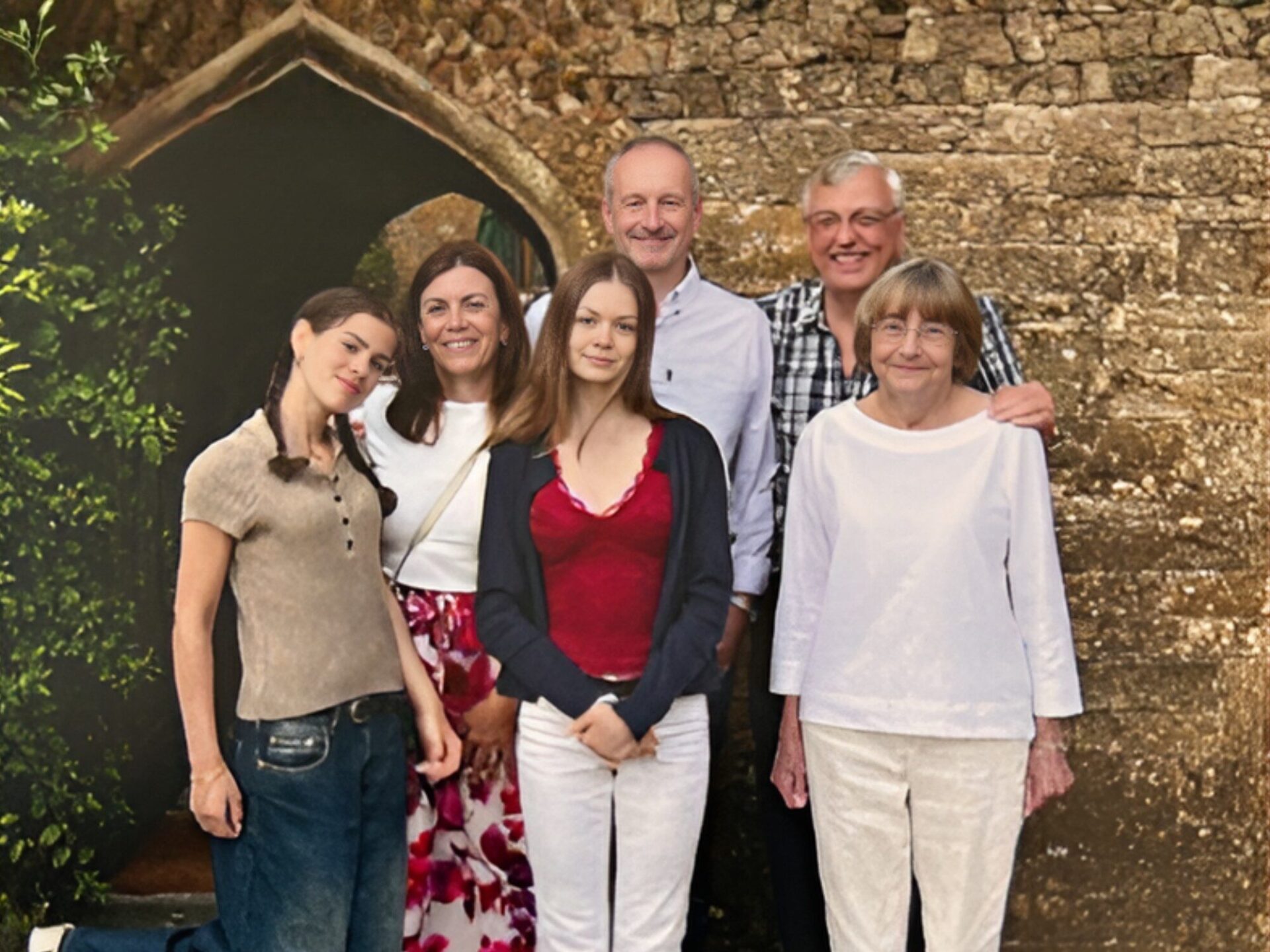
At 2.27am on Boxing Day last year, Judy passed away at the hospice with her beloved husband Peter by her side
From just after lunchtime on Christmas Eve, Peter resisted sleep. That was the moment when he and Judy could no longer communicate, and as the words between them fell away, so did the reassurance of knowing exactly how she felt.
Staying awake became essential. He needed to watch her constantly, ready to respond to even the slightest sign of pain or discomfort - part of the promise he had made to her: to keep her pain-free until the end.
Peter donated £6,000 to cover the cost of his wife Judy’s care

At the point of diagnosis, Peter and Judy had been planning their golden wedding anniversary celebrations.
“We were together for 51 years, married for 49. We never had arguments or cross words. We never said anything unkind to each other. There were things about which we might have a different opinion, but we talked about those, or I would just do as I was told!” Peter laughed.
Judy was a single mother when she met Peter. The eldest of 6 children, she worked as a Personal Assistant and was a wonderful cook, with a wealth of knowledge about the arts and literature, and a soft spot for Buddy Holly, Cliff Richard and Carol King.
“I was in my mid-20s, in the fire brigade and playing a volleyball match with Judy’s brother-in-law, Clive. Judy came to the competition with her sister Sue and their respective babies, who were both in buggies at that time. I was introduced to Judy, and subsequently Sue and Clive invited me to dinner, and that was that. She was a most wonderful wife, mum and Nana in every respect. A very loving and caring person. She was very honest, loyal, supportive, and always put others before herself.”
Judy lived for many years with IBS and the lingering effects of earlier surgery. When bowel cancer appeared, she navigated invasive procedures, exhaustion, and repeated hospital visits. She endured everything with quiet resolve, even shielding Peter from her own fears by hiding her research into symptoms and prognoses.
Due to Judy’s health problems, long-distance travel for holidays had been significantly curtailed, and Peter and Judy always had to avoid holidays in hot and humid countries.
“Whilst Judy was in hospital, on one occasion she said to me quite out of the blue, ‘You know that you always thought that you would enjoy a trip to India, well, once this is all over you will now be able to go!’ Quite remarkable - always thinking of others, even though she knew she was close to coming to the end of her own life.”
When it became clear that any treatment would be brutal and unlikely to be successful, Judy made her decision calmly: no chemotherapy! She wanted a peaceful, pain-free passing at home.
“Once we had been given the diagnosis, and the prognosis, she told me what she wanted to do. So, I told her that I would look after her. I promised her that throughout whatever time we had left, she would never be in pain.
I also promised her that I would look after the family, as if she were still here, and any decisions I made, I would base them on what she would do.”
With the support of the district nurses, Peter cared for Judy at home for as long as he, and they could. As Judy’s symptoms progressed, her breathing changed and her anxiety rose.
“During the time that Judy was at home. I was able to give her morphine and the other drugs that she needed. However, there was a limit on the amount I could give her.”
It became apparent to Peter, and the hospice team that Judy now needed to be offered the care which could only be provided at the hospice.
“Early one morning Amy from the hospice telephoned to check on Judy. Immediately after the call Amy, having assessed Judy’s condition, checked to see if there was a bed available at the hospice. Both of my parents had been cared for by the hospice at their end of life, so Judy had seen the hospice, and was familiar with what it could offer.
When Amy called back to confirm that there was a bed for Judy, it only took a two-minute conversation with Judy for her to accept the offer, and she was admitted by midday on the same day.
From the moment Judy arrived, she felt safe and comfortable. By that first evening, she was relaxed in a way she had not been for weeks. The hospice also provided me with a bed in Judy’s room, which meant I could stay with her 24/7 so she was never alone.”
Peter kept a constant watch over her through Christmas Eve, Christmas Day and into Boxing Day, watching for any signs of discomfort.
“I kept telling her, ‘I’m here,’ holding her hand and talking to her. Then she took her last breath. I had kept my promises.
“The overall care provided by the hospice was exemplary. There were no exceptions. Every member of staff provided their care in their own way, and it was all faultless. We each even received a Christmas present on Christmas Day. It was not just the medical team, and the nurses; the cleaners, catering staff, volunteers, everyone was outstanding. They are the people who keep everything running. They are not often front‑of‑house, but they are just as important, because without them, the medical team and the nurses could not do their bit. I will be forever grateful. The hospice allowed me to look after Judy the way I promised her I would. I can never thank them enough."
Following Judy’s death, Peter donated £6,000 to the hospice to cover the cost of Judy’s care.
"I have again seen first-hand how much the hospice relies on donations. People give what they can and without that generosity, families like ours would not have this standard of care. Judy wanted me to support the hospice, and because I am fortunate enough to do so, I decided the best way would be for me to cover the cost of her care so that other people’s donations can go towards helping the next family who needs it."
Judy’s family also created a Much Loved donation page, raising over £3000 for the hospice.
Judy was a planner. She even planned for her own passing. She set out her own Order of Service, quietly, gently, and thoroughly. She chose the music for the crematorium, prayers, poems, a wicker casket, and red-and-white roses. The poem she selected for the end of the service was “She Is Gone” by David Harkins, wanting it not only for Peter but for everyone who loved her.
You can shed tears that she is gone
Or you can smile because she has lived
You can close your eyes and pray that she will come back
Or you can open your eyes and see all that she has left
Your heart can be empty because you can’t see her
Or you can be full of the love that you shared
You can turn your back on tomorrow and live yesterday
Or you can be happy for tomorrow because of yesterday
Do you have a story to share?
Personal stories are a powerful way for us to raise awareness of the hospice’s services and show the difference we are making to the lives of patients and their families.
By kindly agreeing to share your story, you are making a real difference – thank you.
Send us your story